본문 바로가기 주메뉴 바로가기

IBS
Yemilab Operation Center

  • About Yemilab
    • History of Korean underground laboratory
    • Organization
    • Location
    • Contributions
  • For Visitor
    • General announcement
    • How to come
  • For User
    • LoI format
  • Research
    • Particle physics
    • Nuclear physics
    • Radiation technology
    • Others
  • Publication
    • Journal
    • Youtube
    • Newspaper
  • Events
    • Sindong Science drawing contest
    • Underground Science school
사이트맵 전체메뉴 열기
Home Research Nuclear physics Astrophysics
Print Page

Research

  • Particle physics
    • Dark matter
    • Neutrino
    • Others
  • Nuclear physics
    • Rare decay
    • Astrophysics
  • Radiation technology
  • Others
    • Geology
    • Environmental radiation
    • Biology
    • Seismology

Astrophysics

(Near future plan) Yemi Underground Nuclear Astrophysics @ Korea (YUNA@K)

  • Nuclear cross section measurement of the nuclear reactions of interest in astrophysics
  • Yemilab provides a less muon (1/43,000 times) and neutron (1/200 times) than above ground.
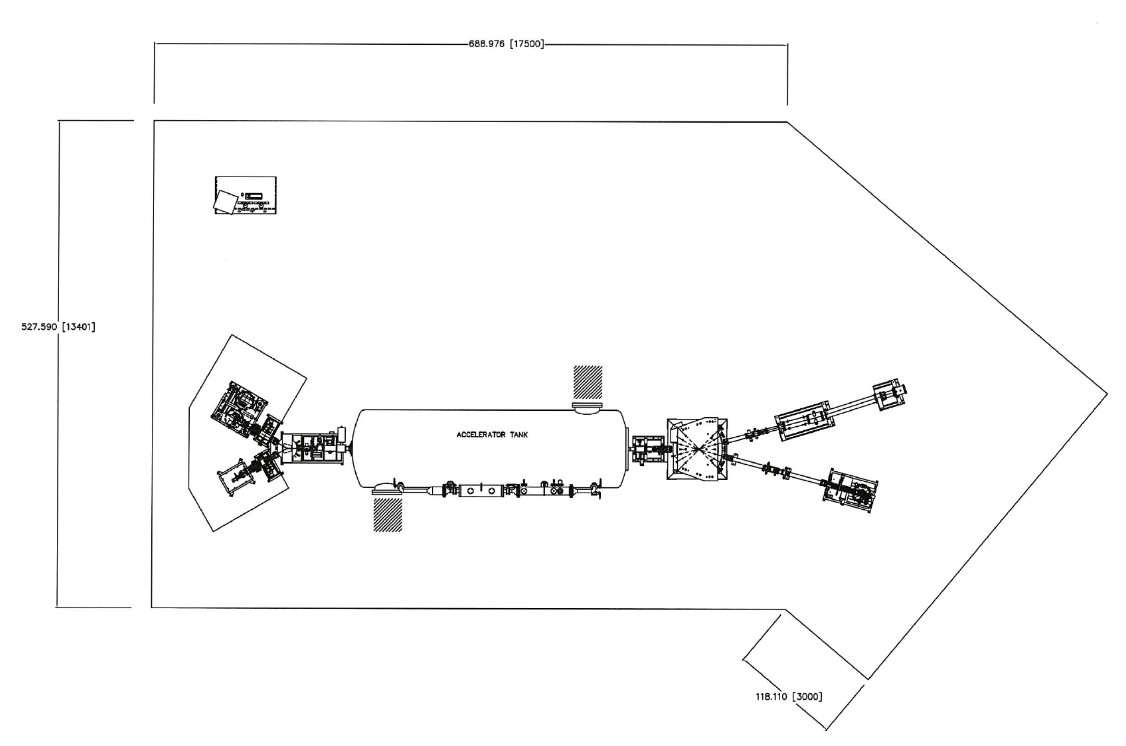
Yemi Underground Nuclear Astrophysics at Korea
Ion Beam Specifications – Beam, E(MeV), C(mA), Charge
Beam E(MeV) C(mA) Charge
¹H 6 50 +1
⁴He 9 10 +2
¹⁰B 15 1.6 +4
¹²C 12 15 +3
¹⁶O 16 +4
¹⁶O 20 +5
²⁸Si 12 27 +3
A schematic floor plan of an accelerator facility showing the central tank and connected beamlines

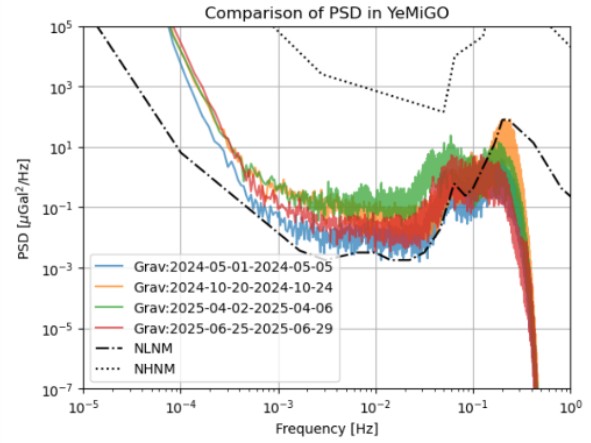
YeMiGO (Yemilab) : Yemi Micro-Gravity Observatory
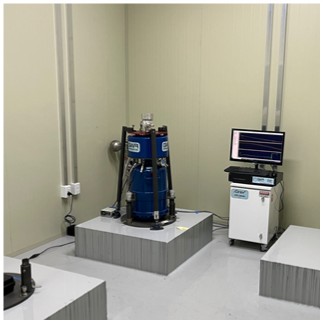
  • A photograph of a gravity observation instrument installed on a raised platform next to a monitoring computer system in the YeMiGO laboratory.
  • A line graph showing Power Spectral Density (PSD) over frequency for gravity measurements from 2024 to 2025, compared to reference noise models.
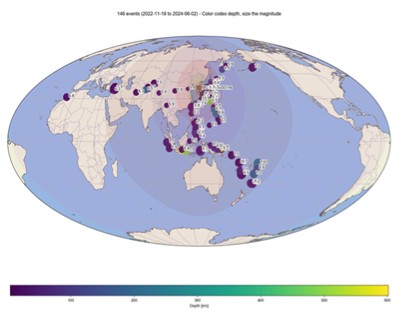
  • A global map displaying the distribution and depth of seismic events across the Asia-Pacific region using color-coded markers.
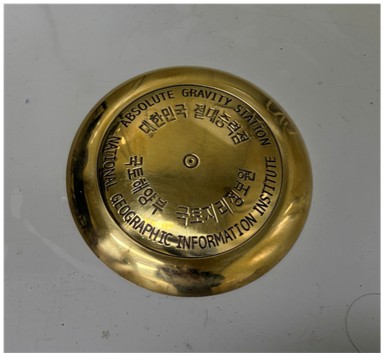
  • A close-up of the circular brass floor marker for the National Absolute Gravity Standard Station, established by the National Geographic Information Institute (NGII) on April 3, 2026.
  • 4th Photo :

    National Absolute Gravity Standard Station by NGII (From April 3, 2026)

Earthquake Early Detection using Micro-Gravity Data

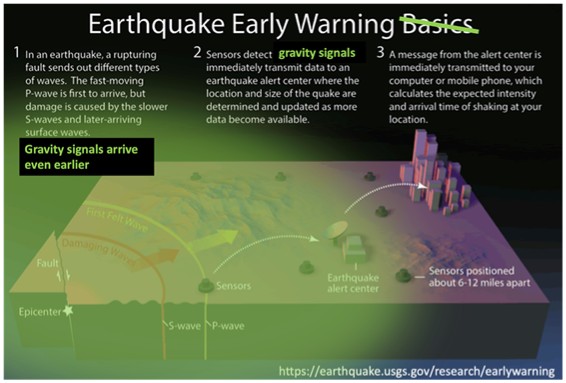
  • To use gravity signal realizes the paradigm shift in the EQ warning system.
  • Because the gravity signal propagates with a speed of light, it arrives faster than the arrival of the P-waves.
  • Even the PEGS propagates faster than the P-wave, so it can secure enough time to respond before the arrival of the S-wave.
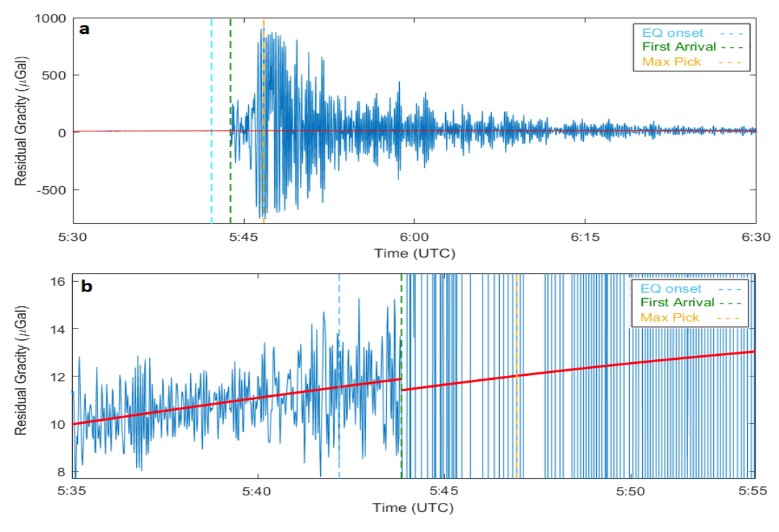
  • Two line graphs displaying residual gravity fluctuations over time, with markers indicating the earthquake onset, first arrival, and maximum pick.
  • An infographic illustrating earthquake early warning basics, emphasizing that gravity signals from a fault rupture arrive at sensors even faster than P-waves and S-waves.
  • 1st Photo :

    Coseismic gravity change after the earthquake (Dehghan et at, 2025, Pure and Appl. Geophys.)

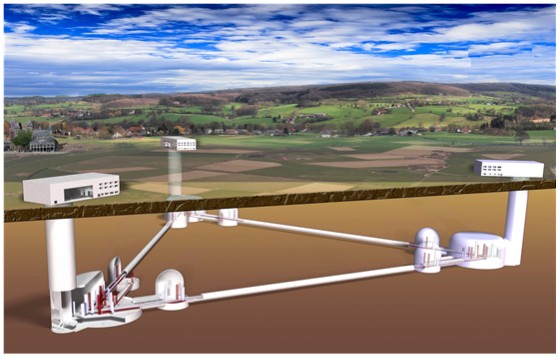
Newtonian noise mitigation for Ground-based Gravitational-wave Detectors

  • Newtonian & seismic noise wall below 30Hz
    • Extend the low-frequency detetction bands
    • Detect longer duration compact binary inspiral objects: enhancing SNR
    • Improve the data quality due to mitigation of seismic vibrations caused by Earth
  • Microgravity & seismic waves studies in the underground environment using superconducting gravimeter & seismometers (infrasound microphone etc)
  • Collaboration: LIGO, KAGRA, Einstein Telescope
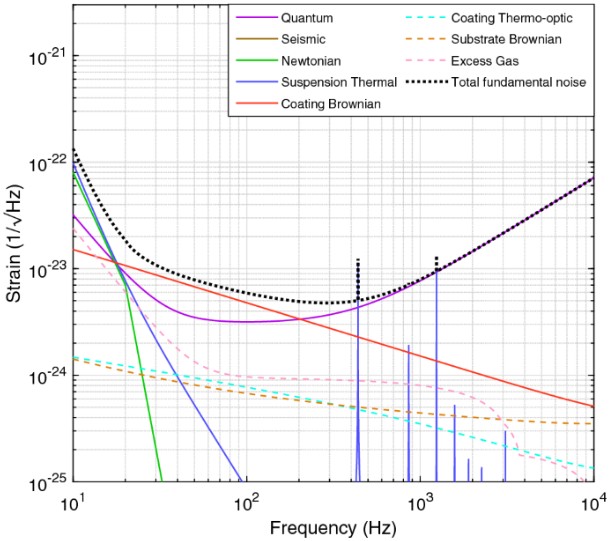
  • Sensitivity curve of Virgo and the seismic & Newtonian noise wall (shaded region)
  • Einstein Telescope : European Space Agency
  • 1st Photo :

    Sensitivity curve of Virgo and the seismic & Newtonian noise wall (shaded region)

  • 2nd Photo :

    Einstein Telescope : European Space Agency

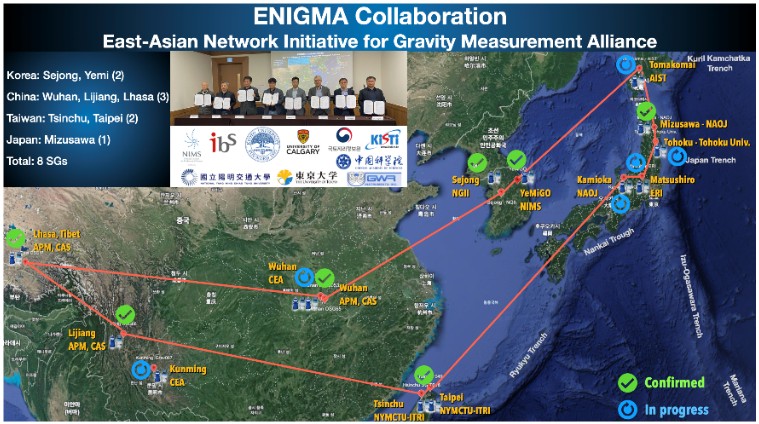
ENIGMA – East-Asian Microgravity Measurement Collaboration

- Collect SG gravity data for: Earthquake, Geodesy, Dark Matter Clumps etc

  • Korea: NIMS, NGII, KISTI
  • Canada: Univ. of Calgary
  • Japan: Univ. of Tokyo, Kyoto Univ.
  • China: CAS, Innovative Academy for Precision Measurement Science & Technology
  • Taiwan: National Yang-Ming Chiao-Tung Univ.
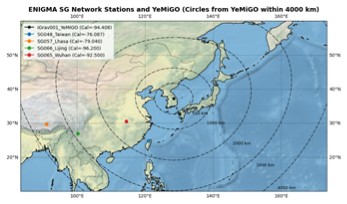
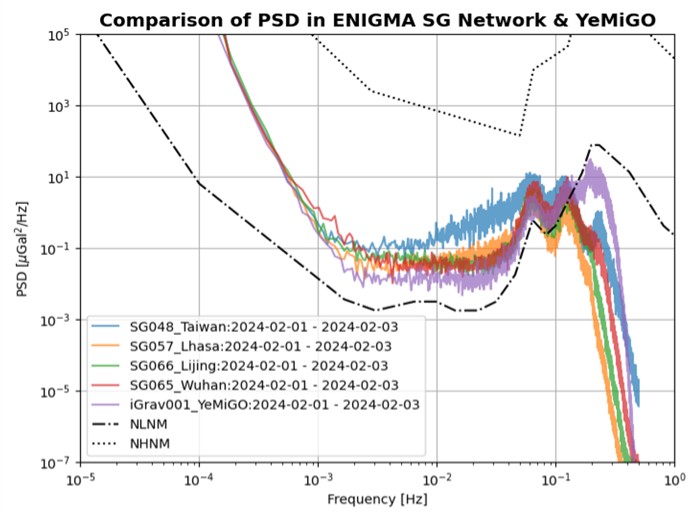
ENIGMA SG Network Stations and YeMIGO (Circles from YeMIGO within 4000km)
  • A line graph comparing the Power Spectral Density (PSD) of various ENIGMA SG Network stations and YeMiGO over frequency, referenced against standard noise models.
  • A satellite map illustrating the ENIGMA East-Asian gravity measurement network connecting stations across Korea, China, Taiwan, and Japan, including an inset photo of a collaboration signing ceremony.

Gravity changes due to possible dark matter clumps passing
by Earth or rotating inside the Earth inner core
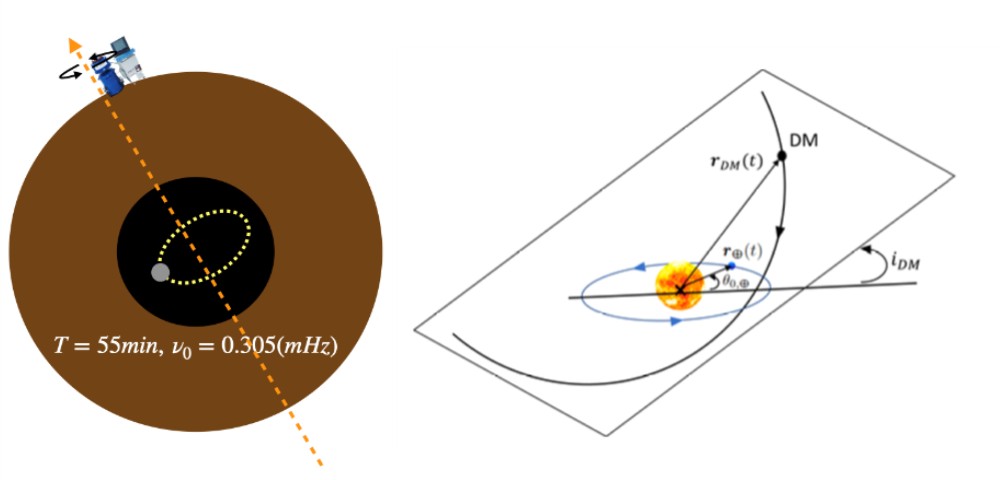
  • A combined diagram illustrating two theoretical scenarios of dark matter clumps (DMC) affecting gravity: one rotating inside the Earth's inner core, and another passing by the Earth along an orbital path.
    • DMC (Dark matter clumps) in the Solar System
      • C. J. Horowitz and R. Widmer-Schnidrig, PRL 124, 051102 (2020)
      • M. Cuadrat-Grzybowski et al., PRD110, 063029 (2024)
    • If DM exists, there might be two possibilities: DMC captured by the Earth’s gravity or passed by the Earth with a certain orbital motions
Back to top
IBS
Yemilab Operation Center
주소
211, Hambaek-ro, Sindong-eup, Jeongseon-gun, Gangwon-do, Republic of Korea
Copyright IBS Yemilab at IBS. All Rights Reserved.