
Seminars & Events
Highlight
IBS Center for Genome Engineering Welcomes Professor Yoonhee Jin for Seminar on Stem Cell Research
On March 5, 2025, Professor Yoonhee Jin from the Department of Physiology at Yonsei University College of Medicine visited the Center for Genome Engineering (CGE) at the Institute for Basic Science (IBS) to give a seminar.
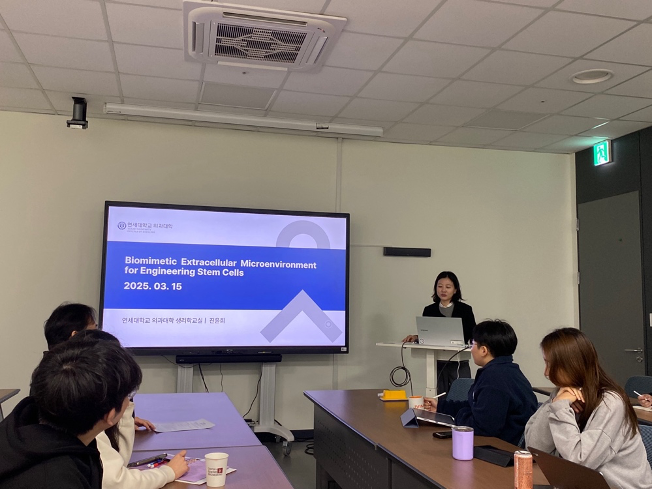
Figure 1. Professor Yoonhee Jin’s Seminar at the Center for Genome Engineering
The seminar, titled “Biomimetic Extracellular Microenvironment for Engineering Stem Cells,” provided insights into Matrigel-based ECM research and muscle tissue engineering.
Professor Jin received her BSc in Biomedical Sciences from Imperial College London in 2010 and earned her PhD in Pharmacology from the University of Cambridge in 2014. She later worked as a postdoctoral researcher and research professor at Yonsei University’s Department of Biotechnology. Since 2021, she has been serving as an assistant professor at the Department of Physiology at Yonsei University College of Medicine.
Currently, she leads the Therapeutic Stem Cell Laboratory, where she integrates molecular biology, physiology, and engineering to develop high-quality stem cell production systems. These systems are recognized as critical technologies for regenerative medicine, drug testing, and disease modeling.
In the first part of the seminar, Professor Jin introduced her recent study published in Advanced Functional Materials (2024), titled “Uterus-Mimetic Extracellular Microenvironment for Engineering the Female Reproductive System” (Cha, Eunju, et al.). The research team developed a uterus-mimetic extracellular microenvironment (UEM) for the functional reconstruction of female reproductive tissues. By utilizing decellularized uterine extracellular matrix (UEM), they successfully replicated the native protein composition, making significant advancements in endometrial organoid (EO) culture.
When EO-UEM was transplanted into an injured uterine model, pregnancy rates improved, demonstrating its potential for regenerative medicine applications. Additionally, co-culturing endometrial organoids with stromal cells within the UEM established a robust platform for studying early blastocyst implantation.
The latter half of the seminar focused on muscle tissue engineering, particularly the importance of muscle fiber alignment and the role of the ECM. Muscle fibers are highly aligned structures, and the research aimed to determine whether ECM components and proteins play a crucial role in muscle function or if fiber alignment itself is the primary factor.
Professor Jin further outlined her future research plans, which include investigating therapeutic approaches for muscle-related diseases, emphasizing the necessity of studying muscular disorders for developing targeted treatments.
The seminar featured an interactive Q&A session, where discussions revolved around the mechanisms by which SUN1/2 induces epigenetic changes and feedback on figures illustrating these mechanisms. Participants engaged in dynamic discussions on both stem cell research and tissue engineering methodologies, exchanging ideas on the latest trends in the field.
The CGE actively invites external researchers to hold seminars, providing a platform for scientists within IBS to exchange scientific insights and ideas. This particular seminar served as a valuable opportunity to explore the latest developments in biomimetic ECM and muscle tissue engineering. Moving forward, CGE will continue to broaden its role as a “Research Playground” by fostering discussions on diverse research topics.

- 55, Expo-ro, Yuseong-gu, Daejeon, South Korea, 34126 Tel. +82-42-878-8310
Copyright(c) 2022 Center for Genome Engineering Research at IBS. All Rights Reserved.