
Seminars & Events
Highlight
Professor Heon-Woo Lee of Kyung Hee University Elucidates Key Principles of Angiogenesis and Blood-Brain Barrier Maintenance
On July 2, the Center for Genome Engineering (CGE) welcomed Professor Heon-Woo Lee of Kyung Hee University for an internal seminar titled, "Animal model and its application in vascular biology: endothelial migration and differentiation." Dr. Lee, an Assistant Professor in the Department of Pharmacology at the College of Pharmacy, presented paradigm-shifting research that redefines our understanding of vascular biology.
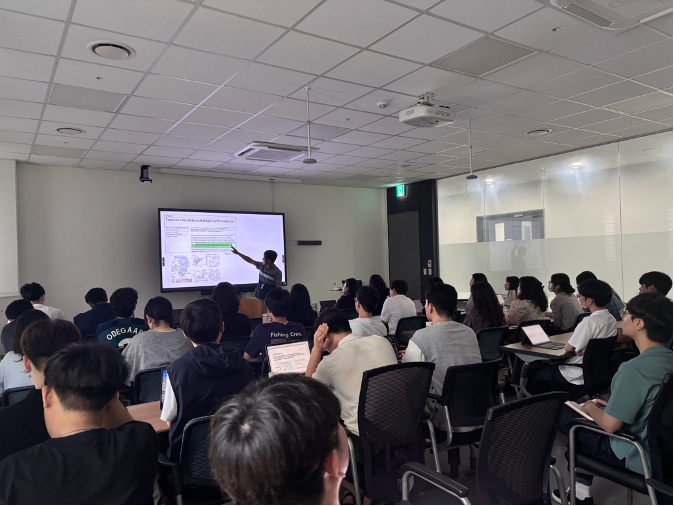
Figure 1. On-site coverage of the CGE Internal Seminar held on July 02
Professor Lee's distinguished career includes Ph.D. and M.S. degrees from Kyung Hee University, followed by a postdoctoral fellowship at Yonsei University and a nine-year tenure as a research scientist at Yale University, where he conducted pioneering work in cardiovascular biology and gene editing.
His seminar focused on two groundbreaking areas: the origin of angiogenesis and the metabolic crosstalk essential for vascular stability.
Rewriting the Origin of Angiogenesis: The "Reverse Migration" of Venous Endothelial Cells
Angiogenesis, the formation of new blood vessels from pre-existing ones, is critical in both physiological and pathological processes, including tumor growth and ischemic recovery. The traditional model posits that angiogenesis is initiated by growth factors like VEGF, which stimulate the sprouting of nearby capillaries. However, this model does not fully account for the massive number of endothelial cells required to form a new vascular network.
Professor Lee's research provides a definitive answer. He demonstrated that the primary driver of angiogenesis is the "reverse migration" of endothelial cells, a process induced by hemodynamic forces. His work identifies venous endothelial cells as the key progenitors in this process. Using single-cell RNA sequencing (scRNA-seq), his team identified a novel venous endothelial cell marker, Gm5127, and subsequently created an inducible lineage-tracing mouse model. This model revealed that approximately 80% of endothelial cells in the developing retinal vasculature originate from veins. These cells migrate against the direction of blood flow and sequentially differentiate into capillary, tip, and finally, arterial endothelial cells.
This mechanism was found to be conserved in pathological angiogenesis, such as oxygen-induced retinopathy (OIR) and arteriovenous malformations (AVMs). In OIR models, neovascularization originated exclusively from venous endothelium, suggesting that current anti-angiogenic therapies may need to be re-evaluated to target this critical cell population.
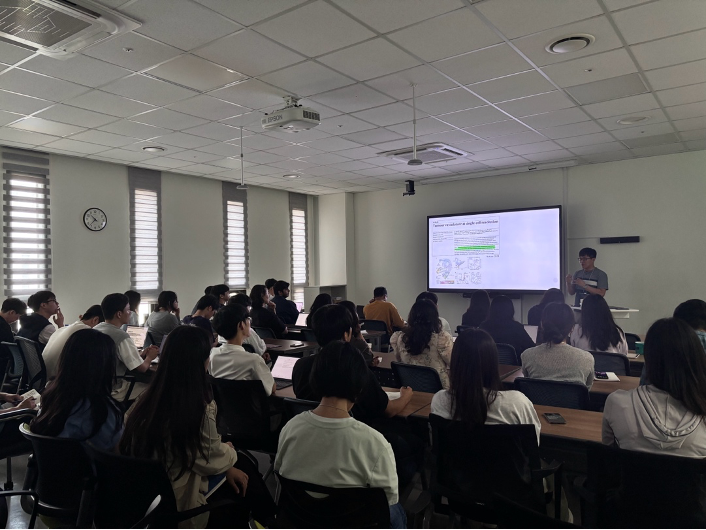
Figure 2. Professor Heon-Woo Lee is giving the seminar.
A New Mechanism for Blood-Brain Barrier Maintenance: The Endothelial-Pericyte "Lactate Shuttle"
Professor Lee also unveiled a novel mechanism governing the stability and function of the blood-brain barrier (BBB). Vascular endothelial cells are highly glycolytic, producing and secreting large amounts of lactate. His research revealed, for the first time, that this endothelium-derived lactate is taken up by adjacent pericytes, serving as a critical energy source and a substrate for amino acid biosynthesis. Pericytes are essential for maintaining the structural and functional integrity of the BBB.
To demonstrate this, his team created an endothelial-specific GLUT1 knockout mouse model (Glut1iECKO), effectively blocking lactate production. This resulted in a rapid loss of pericytes via apoptosis, leading to BBB breakdown and increased vascular permeability. Remarkably, oral administration of lactate to these mice suppressed pericyte loss and significantly restored BBB function, providing definitive proof of the critical role of endothelium-derived lactate. The study further detailed the specific "lactate shuttle" mechanism, involving the MCT1/MCT5 transporters in endothelial cells and the MCT12 transporter in pericytes.
In conclusion, Professor Lee's research opens new frontiers in two major areas of vascular biology. By redefining the origin of angiogenesis and identifying the crucial metabolic interplay between endothelial cells and pericytes, his findings provide a vital scientific foundation for developing innovative therapeutic strategies for ischemic diseases, cancer, and neurodegenerative disorders.
※ Reference
- Lee, H. W., Shin, J. H., & Simons, M. (2022). Flow goes forward and cells step backward: endothelial migration. Experimental & Molecular Medicine, 54(6), 711–719.
- Lee, H. W., Xu, Y., Zhu, X., Jang, C., Choi, W., Bae, H., Wang, W., He, L., Jin, S. W., Arany, Z., & Simons, M. (2022). Endothelium-derived lactate is required for pericyte function and blood-brain barrier maintenance. The EMBO Journal, 41(9), e109890.

- 55, Expo-ro, Yuseong-gu, Daejeon, South Korea, 34126 Tel. +82-42-878-8310
Copyright(c) 2022 Center for Genome Engineering Research at IBS. All Rights Reserved.