
Seminars & Events
Highlight
Professor Dae-Jin Yun Presents Key Molecular Mechanisms of Plant Stress Adaptation in the Face of Climate Change
On August 13, Professor Dae-Jin Yun of Konkuk University, a world-renowned authority in plant stress biology, delivered a seminar at the Center for Genome Engineering (CGE) titled ‘Plant Stress Research for Climate Change’. Professor Yun, who currently serves as the Director of the Global Plant Stress Research Center (SRC), is a member of the Korean Academy of Science and Technology and has been named the top molecular biology scholar in Republic of Korea for three consecutive years by Research.com for his outstanding contributions to the field.
Professor Yun began by highlighting the key challenges of the 21st century: climate change, food security, and energy. He explained that abiotic stresses such as drought, salinity, and extreme temperatures have a massive impact on plant growth. Because plants are sessile, they must adapt to these environmental changes, making them an ideal model for studying stress responses. For the past 28 years, his lab has used the model plant
Arabidopsis thaliana to investigate these adaptation mechanisms through molecular genetics, biochemistry, and systems biology. The seminar provided an in-depth look at the key molecular mechanisms of plant responses to cold and salt stress, which his team was the first in the world to identify.
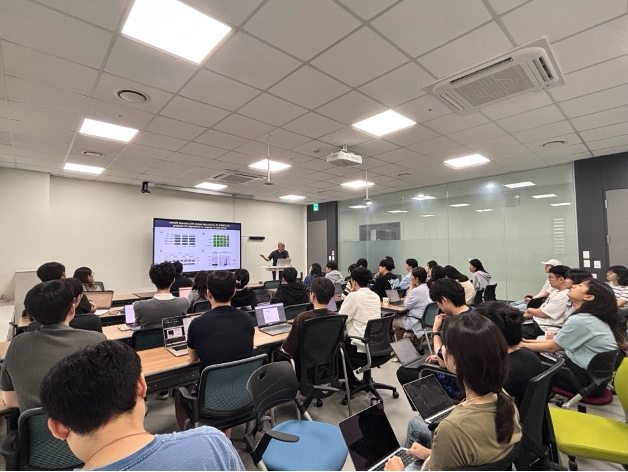
Figure 1. Scene from the CGE Internal Seminar held on Aug. 13
The Secret to Cold Tolerance: The HOS15-HD2C Protein Degradation System
When plants are exposed to cold, a complex signaling cascade is activated within their cells for survival. Professor Yun's team identified a protein named HOS15 as a key regulator in this process. They demonstrated that mutant plants lacking the HOS15 gene were highly sensitive to freezing temperatures, proving the protein is essential for acquiring cold tolerance.
The team revealed that HOS15 functions as a receptor for an E3 ubiquitin ligase complex, which is part of the cell's protein degradation machinery. When cold stress occurs, HOS15 directly binds to HD2C (Histone Deacetylase 2C), a regulatory enzyme that modifies histones. This binding acts as a signal to promote the degradation of HD2C. Under normal conditions, HD2C represses the expression of cold-responsive (COR) genes. However, when the plant senses cold, HOS15 removes HD2C, lifting the repression. This allows key transcription factors like CBF to access the chromatin of these genes and activate their expression. This sophisticated switch mechanism—the degradation of HD2C by HOS15—was identified as a core process that determines a plant's ability to acclimate and survive in the cold.
Discovering the Link Between Salt Stress Adaptation and Flowering Time
Salinity is a serious stress factor, affecting approximately 20% of the world's irrigated agricultural land. Professor Yun's team found the key to how plants survive and maintain their reproductive strategy in saline environments in the protein SOS3.
SOS3 is a calcium (Ca²⁺) sensor protein that plays a critical role in extruding toxic sodium (Na⁺) ions that enter the cell under high-salt conditions. The team demonstrated that SOS3 directly interacts with the sodium transporter HKT1 on the plasma membrane to control its activity, thereby managing sodium ion efflux.
Furthermore, the team made the surprising discovery that SOS3 is involved not only in salt resistance but also in regulating the timing of flowering, a crucial reproductive stage. Analysis of the protein's amino acid sequence (MGCSVSKKKKK) revealed that myristoylation of the second amino acid(glycine) targets SOS3 to the cell membrane to confer salt resistance, while palmitoylation of the third amino acid(cysteine) targets it to the nucleus to regulate flowering. SOS3 is thus a multi-tasking protein that performs two distinct duties—stress response (survival) and flowering (reproduction)—by changing its subcellular location. Along with the discovery of the GIGANTEA protein as another missing link between flowering and stress adaptation, this work provides a deep understanding of how plants exquisitely balance survival and reproduction in a given environment.
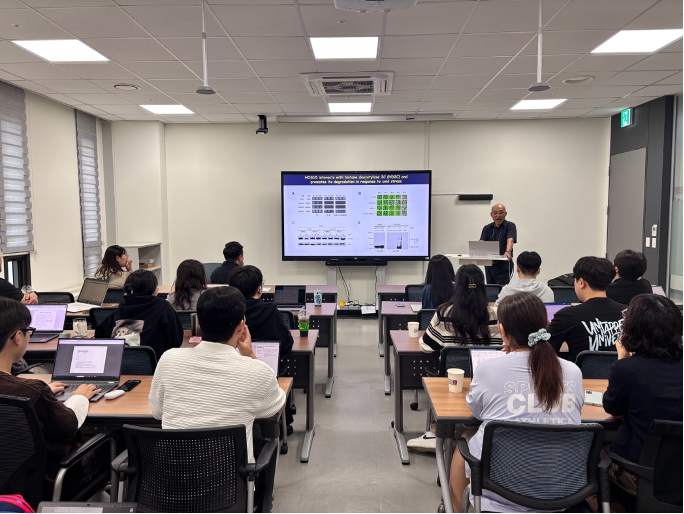
Figure 2. Prof. Yun presenting at the seminar
Professor Yun's research clearly illustrates the fundamental molecular mechanisms that allow plants to adapt and survive in the face of environmental stress. These foundational scientific discoveries provide the essential source technology for developing climate-resilient crops to address the future food crisis, highlighting their immense significance. His pioneering work will continue to serve as a vital scientific basis for contributing to sustainable agriculture and the future of humanity.

- 55, Expo-ro, Yuseong-gu, Daejeon, South Korea, 34126 Tel. +82-42-878-8310
Copyright(c) 2022 Center for Genome Engineering Research at IBS. All Rights Reserved.