
Seminars & Events
Highlight
Dr. Keun-Tae Kim Presents Breakthroughs in In Vitro Reconstruction of Human and Non-Human Primate Early Embryonic Development
On June 11, the Center for Genome Engineering (CGE) at the Institute for Basic Science hosted a compelling internal seminar titled, "Towards in Vitro Reconstruction of Human & Non-Human Primate Early Embryonic Development." The session was led by Dr. Keun-Tae Kim, an Associate Research Professor at the College of Pharmacy, Seoul National University, and a newly appointed Special Researcher at the Institute for the Advanced Study of Human Biology (ASHBi), Kyoto University.
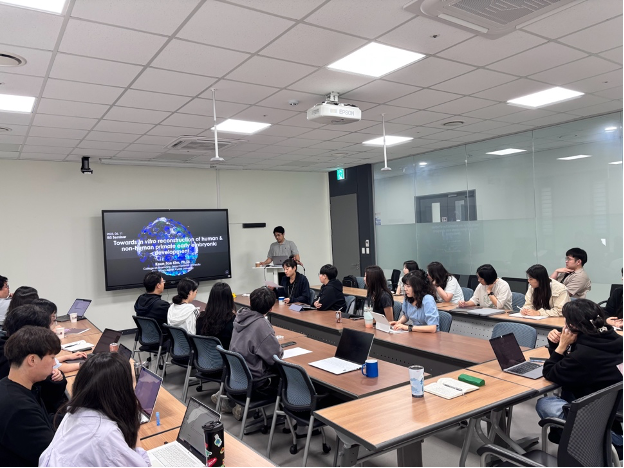
Figure 1. On-site coverage of the CGE Internal Seminar held on June 11
Dr. Kim's research addresses a critical challenge in developmental biology: mimicking the peri-implantation stages of human embryonic development, a period that has been notoriously difficult to study due to technical and ethical constraints. To navigate these challenges, his team has utilized non-human primate (NHP) cells as a surrogate model system. A significant technical hurdle has been the establishment of stable naïve pluripotent stem cells (PSCs) from various primate species.
Dr. Kim reported the successful development of a universal protocol that efficiently reprograms primed PSCs from multiple primate species into a stable naïve state. These naïve PSCs have demonstrated the capacity to differentiate into extra-embryonic lineages, including the trophectoderm and primitive endoderm, a crucial step in recreating embryonic structures.
Building on this success, his team has established a 3D in vitro embryo model, termed the "Stem cell-derived PRImate-embryo Model" (SPRIM). The next phase of this research will involve comparative multi-omics analyses, including scRNA/scATAC-seq and spatial transcriptomics, to investigate the biological and structural similarities between the SPRIM models and in vivo embryos. This work is poised to deepen our understanding of early primate development, uncover species-specific mechanisms, and significantly contribute to the field of evolutionary and developmental biology (Evo-Devo).
Dr. Kim's academic journey includes a Ph.D. from Sogang University in 2020, where his thesis focused on improving the efficacy and safety of pluripotent stem cell-based therapeutic applications. He has since held postdoctoral positions at Seoul National University, studying pluripotency regulation and CRISPR-based genome editing, and at ASHBi, Kyoto University, where he focused on in vitro models of early mammalian development. His expertise is further highlighted by his time as a visiting researcher at the Institute of Molecular Biotechnology (IMBA) in Vienna, where he studied mouse blastoid formation. Dr. Kim's innovative work has also resulted in several patents, notably for an in vitro model of human post-gastrulation development.
Looking ahead, Dr. Kim plans to generate lineage-specific reporter lines to overcome the time-consuming process of identifying markers, thereby enabling pre-emptive lineage confirmation.
Dr. Kim's research represents a significant leap forward, providing a powerful platform to investigate fundamental questions in developmental biology at a molecular level. The ability to precisely manipulate these in vitro models opens new avenues for exploring human-specific developmental traits, elucidating the mechanisms of intractable genetic diseases, and ultimately, laying the groundwork for novel regenerative therapies.

- 55, Expo-ro, Yuseong-gu, Daejeon, South Korea, 34126 Tel. +82-42-878-8310
Copyright(c) 2022 Center for Genome Engineering Research at IBS. All Rights Reserved.