Research&Development
Quantum Sensing
Quantum-Noise-Limited Amplifiers for Axion SearchesThe Dark Matter Axion Group (DMAG) is at the forefront of developing quantum-noise-limited readout technologies tailored for axion haloscope experiments. Our flagship “yottawatt” JPAs achieve near-quantum-limited noise performance across 1-6 GHz and are actively used in DMAG experiments.
To reduce downtime and extend bandwidth, we pioneered parallel and series-parallel JPA architectures—most notably the Dulcimer Amplifier, which maintains sub-quantum-limited performance over 300 MHz. We also implemented tunable Lumped Element JPAs developed with RIKEN and are advancing alternative technologies including TWPAs and superconducting bolometers for broadband, high-sensitivity detection.
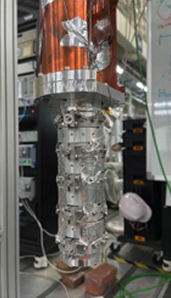
In collaboration with global partners (RIKEN, Aalto, KRISS, and others), we co-develop, test, and validate next-generation quantum-limited amplifiers. To support stable operation near strong magnetic fields, we engineered compact multi-layer magnetic shields that reduce residual fields below 100 nT even under 100 mT.
The entire readout chain is optimized for cryogenic environments, with superconducting signal paths, thermally anchored filters, and extensive RF/DC line conditioning. These design elements enable stable operation down to 20 mK, essential for detecting extremely weak axion-induced signals.
Together, these innovations form a robust platform for precision quantum sensing and next-generation dark matter detection.
High-Frequency Approaches
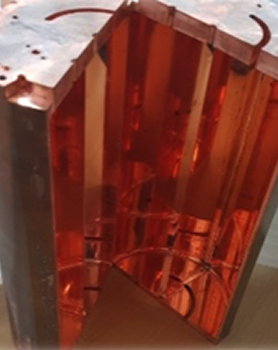
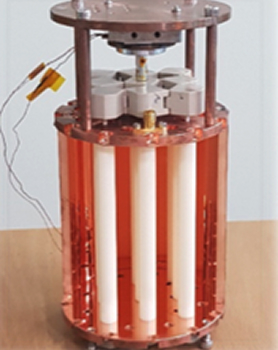
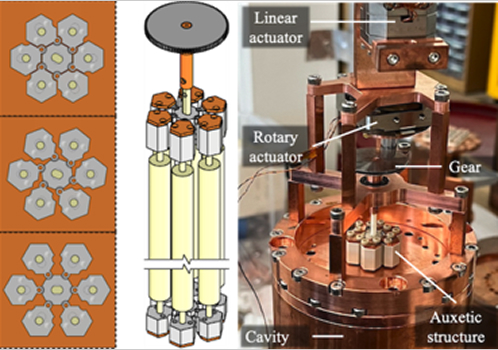
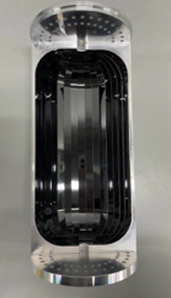
Cavity designs for high-frequency axion searchesIn the search for dark matter axions, several experimental efforts have successfully excluded parameter space, particularly below 5 GHz, with sensitivities close to theoretical predictions. However, there remains a significant lack of experimental studies in the high-frequency regime. Recently, theoretical developments have increasingly pointed to the possibility that dark matter axions may exist at higher frequencies, making exploration in this region more critical.
Reaching higher frequencies is challenging due to the trade-off between resonant frequency and detector volume—smaller cavities are typically required, which leads to reduced sensitivity. To overcome this limitation, the DMAG experiment has investigated several novel cavity designs, including multi-cell cavities, higher-order mode tuning, and photonic crystal haloscopes. These innovative designs allow the accessible frequency range to be significantly extended without sacrificing the effective detector volume.
Thanks to this advantage, each design concept has been implemented in actual high-frequency axion searches and has successfully demonstrated its experimental feasibility. These approaches open up promising pathways toward detecting dark matter axions in the high-frequency regime.
Publication
- Bae, S., Youn, S., & Jeong, J. (2023). Tunable photonic crystal haloscope for high-mass axion searches. Physical Review D, 107(1), 015012.
- Jeong, J., Youn, S., Ahn, S., Kim, J. E., & Semertzidis, Y. K. (2018). Concept of multiple-cell cavity for axion dark matter search. Physics Letters B, 777, 412-419.
- Youn, S., Jeong, J., & Semertzidis, Y. K. (2024). Development of axion haloscopes for high-mass search at CAPP. Frontiers in Physics, 12, 1347003.
High-Temperature Superconducting Technology
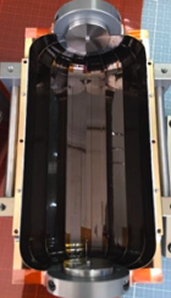
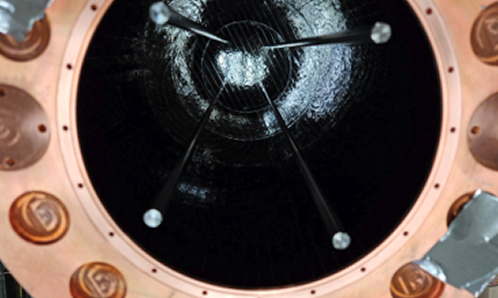
Development of high-temperature superconducting (HTS) cavitiesHigh-Q microwave cavities are essential components in axion haloscope experiments, as they enable the conversion of axions into microwave photons with minimal loss. A higher Q-factor allows the converted photons to survive longer, increasing the scan rate and overall sensitivity. While high-purity copper has been the conventional choice under strong magnetic fields, we have developed a new approach using ReBCO-based high-temperature superconductors, which maintain superconductivity even in multi-tesla fields.
After studying various materials such as YBCO, GdBCO, and EuBCO, we identified optimal candidates and devised a technique to bond 2D HTS films onto the 3D inner walls of cavities—preserving the necessary biaxial texture for low-loss performance. This innovation has enabled us to achieve Q-factors several to over a hundred times higher than those of copper cavities. We are now applying this HTS technology across our haloscope experiments and continuing to optimize performance for future searches.
Publication
Danho Ahn, Ohjoon Kwon, Woohyun Chung, Wonjun Jang, Doyu Lee, Jhinhwan Lee, Sung Woo Youn, HeeSu Byun, Dojun Youm, Yannis K Semertzidisj, “ Biaxially Textured Microwave Cavity in a High Magnetic Field for a Dark-Matter Axion Search ” Phys. Rev. A 17, L061005 (2022).

IBS Dark Matter Axion Group, Creation Hall, KAIST Munji Campus 193 Munji-ro, Yuseong-gu, Daejeon
Copyright(c) IBS Dark Matter Axion Group at IBS.
All Rights Reserved.